
Most organisations start buying workwear in a fairly simple way.
Someone realises the team needs uniforms. Someone looks for a supplier. A garment is selected, the logo is added, the order is produced and the boxes arrive.
For a small team with straightforward requirements, that may be enough.
But workwear becomes a different kind of problem as an organisation grows.
People wear it every day. Different departments may need different garments. New employees join. Existing employees need replacements. Branches open. Colours change. Roles change. Some people work in offices while others spend their days in kitchens, workshops, hospitals, warehouses or out in the field.
At that point, the question is no longer simply, "Where can we buy uniforms in Kenya?"
It becomes:
What should our people wear, why, how should it be supplied, and how do we keep it consistent over time?
That is where a more considered approach to workwear makes a difference.
This guide explains what organisations should consider when choosing workwear in Kenya, from understanding the job and selecting the right garments to branding, sizing, cost, supplier relationships and repeat orders.
What Is Workwear?
Workwear is clothing selected for people to wear while carrying out their work.
That can include:
Field clothing
The important part is not the garment itself. It is why the garment is being worn and what it needs to do.
A receptionist, chef, technician and field officer might all work for the same organisation, but their working days are very different. Putting everyone in the same shirt simply because it is easy to order can create problems with comfort, practicality and appearance.
The better starting point is the work.
Who is wearing it? What do they do? Where do they work? How often will they wear it? What does the garment need to withstand?
Once those questions are answered, the clothing becomes much easier to specify.
Workwear, Uniforms and PPE Are Not the Same Thing
These terms are often used interchangeably, but they serve different purposes.
A uniform primarily creates a consistent appearance and helps people identify members of an organisation or particular team.
Workwear is broader. It includes uniforms, everyday staff apparel and clothing selected because it is suitable for a particular job or working environment.
Personal protective equipment (PPE) is different again. PPE is intended to protect workers from identified workplace hazards.
That distinction matters.
Kenya's Occupational Safety and Health Act, 2007 requires employers to provide and maintain suitable protective clothing and appliances where employees are exposed to certain wet, injurious or offensive substances. Depending on the work, this can include items such as suitable gloves, footwear, goggles and head coverings. Occupational Safety and Health Act, 2007 — Kenya Ministry of Labour
A branded shirt can make your team identifiable. It does not automatically make that shirt PPE.
If employees face hazards at work, the organisation needs to assess those hazards and specify appropriate protective equipment separately. Branding should not be allowed to replace a safety requirement.
This is particularly important for organisations operating in construction, manufacturing, workshops, logistics, healthcare, laboratories and other environments where clothing may be exposed to specific risks.
Why Workwear Matters to an Organisation
Workwear is easy to treat as a procurement exercise because it is a physical product.
But the clothing your people wear affects several parts of the organisation at the same time.
It makes your team easier to recognise
When employees deal directly with customers, visitors, patients or guests, people need to know who represents the organisation.
Consistent workwear makes that recognition easier.
This is particularly useful in hospitality, healthcare, retail, banking, education, events and other customer-facing environments.
It puts the brand into everyday life
A company's brand is not experienced only through its website, advertising or stationery.
People experience it through employees, service interactions, packaging, offices, products and countless small physical details.
Your employees are therefore one of the most visible expressions of the organisation.
The clothing they wear becomes part of that expression.
It can support professionalism
Professionalism does not necessarily mean formal clothing.
A well-fitted polo can be more appropriate than a formal shirt in one environment. A structured shirt may make more sense in another. A durable work shirt may be the obvious choice for a field team.
The important thing is that the clothing fits the organisation, the role and the environment.
It can help distinguish roles
Different garments, colours or branding details can make departments easier to identify.
A hotel might need different clothing for front office, housekeeping, food service and kitchen teams. A hospital may need distinctions between clinical and support staff. An industrial organisation may need a clear difference between office personnel and site teams.
The organisation can still maintain one brand while giving each role clothing that makes sense.
It needs to work for the person wearing it
This is the part that is sometimes missed.
The person approving the order may be sitting behind a desk. The person wearing the garment may spend eight or ten hours standing, walking, lifting, bending, driving or working outside.
That difference matters. A garment that looks good in a quotation or product photograph is not automatically good workwear.
The better question is:
Will this work for the person who has to wear it all day?
Choosing Workwear for Different Industries
There is no universal workwear solution. The right specification changes with the environment.
Corporate and office teams
Corporate teams may use shirts, blouses, polos, trousers, skirts, jackets, knitwear or other professional apparel.
The priorities are usually consistency, fit, comfort and alignment with the organisation's culture.
A conservative financial institution and a creative agency may both need professional clothing, but they do not necessarily need the same clothing.
Hospitality and food service
Hotels, restaurants and other hospitality businesses have a particularly visible relationship with workwear.
Guests interact with employees throughout their experience, so appearance becomes part of the service environment.
At the same time, hospitality work is physically demanding.
Chef wear, aprons, service shirts, housekeeping garments and front-of-house clothing need to allow movement and remain presentable through long shifts and repeated washing.
The garment has to work for both sides of the experience: the employee wearing it and the guest seeing it.
Industrial and field teams

Industrial and field environments place greater emphasis on durability, movement, weather and the demands of the job.
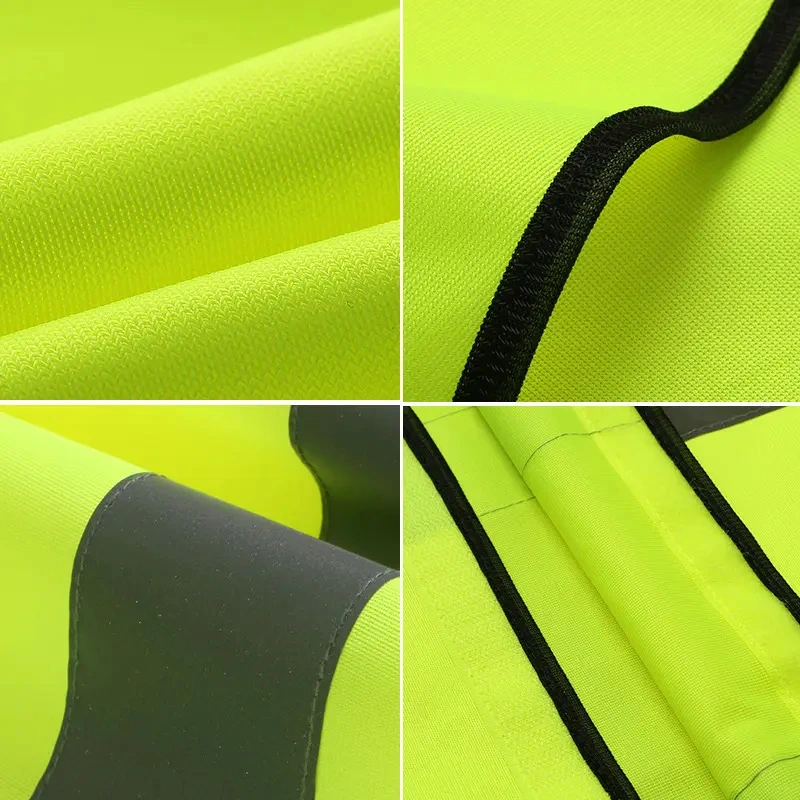
Depending on the work, this may mean work shirts, trousers, overalls, jackets, high-visibility garments or protective equipment.
Where there is a genuine safety hazard, the specification should be driven by the hazard and the applicable safety requirements rather than by the appearance of the logo.
Healthcare

Healthcare clothing needs to work in an environment where cleanliness, movement, comfort and role identification matter.
Scrubs, coats, clinical uniforms and support-staff apparel may all form part of the wider workwear system.
The objective is not simply to make everyone look similar. It is to make the clothing appropriate for the work while maintaining a clear organisational identity.
Schools, NGOs and field organisations
Institutions and organisations working across different environments often have more varied requirements.
An employee may spend one day in an office, another in a community setting and another at an event.
The clothing therefore needs to be practical enough for the work while still giving the organisation a recognisable identity.
Six Questions to Ask Before Choosing Workwear
Before looking through a supplier's catalogue, answer these questions.
1. What does the work actually involve?
Start with the employee's day.
- Do they sit at a desk?
- Do they move between customers?
- Do they stand for long periods?
- Do they work in a kitchen?
- Are they outdoors?
- Do they drive?
- Do they work around machinery?
- Do they regularly bend, lift or move?
The answers will narrow down the right garments much faster than starting with a catalogue.
2. What is the working environment?
Kenya's working environments vary considerably.
Heat, rain, dust, indoor cooling, physical activity and exposure to different materials can all influence garment selection.
A fabric that feels comfortable in an air-conditioned office may not be the best choice for someone working outside all day.
Think about the environment before thinking about the colour.
3. How often will the garment be worn?
There is a major difference between clothing worn for an annual event and clothing worn five days a week.
Daily workwear will be washed repeatedly and subjected to much more wear.
That means fabric performance, stitching, construction, colour retention and care requirements become important.
Kenya's standards system includes textile testing for properties such as colour fastness to washing, perspiration, light and rubbing. Those tests reflect a simple reality: a garment's appearance when it is new tells you very little about how it will look after months of use.
4. Does it fit properly?
Sizing is one of the easiest ways for a workwear programme to go wrong.
A good garment can still look poor if the fit is inconsistent.
Organisations should collect accurate employee sizes and establish a clear sizing process before production.
For larger teams, it is worth thinking beyond the first order. New employees will need sizes later. Existing employees may need replacements.
A reliable sizing record saves time every time the organisation orders again.
5. Will it last?
Price matters, but price alone does not tell you whether a garment is good value.
Consider:
Fabric quality
Stitching
Construction
Colour retention
Washing requirements
Frequency of use
Expected lifespan
Replacement frequency
A garment that costs less but needs to be replaced frequently may cost more over time than a better-specified garment that lasts longer.
The useful question is not simply:
"How much is one shirt?"
It is:
"Is this garment appropriate for how our people will actually use it?"
6. How should the brand be applied?
Branding is more than putting a logo somewhere on the garment.
Think about:
Logo size
Placement
Colour
Department identification
Employee names where appropriate
Embroidery
Screen printing
Heat transfer or DTF
Garment type and fabric
Expected washing and use
The branding method should be selected around the garment and the intended result.
A logo that works beautifully as embroidery on a polo may need a different treatment on another fabric or garment.
Consistency matters too. Once a branding specification is approved, keep a record of it so the next order does not become a new interpretation of the same brand.
How Much Does Workwear Cost in Kenya?
There is no meaningful single price for workwear.
The final cost can depend on:
Garment type
Fabric and construction
Quantity
Sizes
Ready-made versus custom production
Branding method
Number of branding positions
Customisation
Packaging
Delivery
Production timeline
Quantity can affect unit pricing, but that should not be the only factor used to compare suppliers.
Two quotations may appear different because they include different things.
One supplier may include branding and delivery while another quotes for the garment only. One may be offering an off-the-shelf product while another is specifying a custom garment.
When comparing workwear suppliers in Kenya, compare the complete specification, not just the figure at the bottom of the quotation.
- Ask what is included.
- Ask what is not included.
- Ask what the final delivered product is supposed to look like.
That gives you a much more useful comparison.
Ready-Made or Custom-Made Workwear?
Both have their place.
Ready-made workwear
Ready-made garments make sense when:
The required style is readily available.
Standard sizes are suitable.
You need the order relatively quickly.
The organisation does not require unusual specifications.
The available colours and fabrics already work for the brand.
There is no reason to custom-make a garment simply for the sake of saying it is custom.
Custom-made workwear
Custom production becomes more useful when you need:
A specific colour
A particular fabric
A unique fit
A particular construction
Specific details for different roles
A coordinated system across several garments
A design that is not available off the shelf
The right choice depends on the requirement.
The goal is not to make everything custom.
The goal is to make sure the clothing is right for the people, the work and the organisation.
Do Not Leave the Order Until the Last Minute
Timing is one of the most common causes of unnecessary workwear problems.
An organisation may spend several weeks deciding what it wants and then expect the supplier to source, customise, produce and deliver everything within a few days.
That can severely limit the available options.
A better approach is to start with the date the team needs the clothing and work backwards.
Depending on the project, the process may involve:
Understanding the requirements
Recommending suitable garments
Confirming quantities and sizes
Checking availability
Sourcing garments or materials
Developing custom pieces where required
Preparing branding artwork
Approving samples or specifications
Production and branding
Quality checks
Packing and delivery
Urgent workwear can sometimes be accommodated, but urgency should not become the standard planning method.
A supplier who tells you honestly what can and cannot be achieved is more useful than one who promises everything and creates problems later.
How to Choose a Workwear Supplier in Kenya
The supplier you choose can have as much impact on the final result as the garment itself.
Look beyond the catalogue.
Do they understand your organisation?
A useful supplier should want to know about the work, employees, environment and requirements before immediately recommending a product.
If the first question is simply "How many pieces?", you may not be getting much advice.
Can they help you make the decision?
Many organisations know they need workwear but do not know exactly what they need.
Should the team wear polos or shirts?
Should the field staff have overalls?
Which garments should be different by department?
Should some items be custom-made?
A supplier who can help answer these questions can save you from buying the wrong thing.
Can they handle different roles?
Your organisation may have several teams.
The supplier should be able to coordinate different garments while maintaining a coherent brand.
The objective is not necessarily to make everyone look identical.
It is to make everyone look like they belong to the same organisation.
How do they handle branding?
Ask about logo placement, artwork preparation, colour consistency and the branding method being recommended.
The final result should be considered before production starts, not discovered when the boxes arrive.
Do they check the finished order?
Quality control should go beyond checking whether a logo is present.
Orders should be checked for things such as:
Wrong garments
Wrong sizes
Incorrect quantities
Construction issues
Branding errors
Colour inconsistencies
Missing pieces
These are small details until you are standing with a team of 100 people and 12 shirts are wrong.
What happens after the first order?
This is one of the most important questions.
Employees leave. New employees join. Garments wear out. Departments change. Branches open. Sometimes the organisation simply needs another 20 pieces of the same thing six months later.
If every repeat order requires you to start the entire process again, the supplier relationship is not doing enough for you.
Common Workwear Mistakes
Choosing on price alone
The lowest initial price does not always produce the lowest overall cost.
Look at quality, lifespan, replacement frequency, branding and the amount of management involved.
Choosing the garment before understanding the job
Start with the work.
The garment comes second.
Giving everyone the same clothing
One organisation can have several different working environments.
The answer is often a coordinated system rather than one garment for everyone.
Leaving everything until the last minute
Late planning reduces your choices and puts unnecessary pressure on everyone involved.
Confusing PPE with branded clothing
A logo does not turn ordinary clothing into protective equipment.
Safety requirements should be addressed separately and properly.
Forgetting what was ordered
This becomes a problem surprisingly quickly.
If the organisation does not keep specifications, colour references, garment details, branding instructions, approved sizes and quantities, the next order becomes another guessing exercise.
Treating every order as a new project
If your organisation buys workwear repeatedly, you should not have to rebuild the specification every time.
The first order should make the second one easier.
Workwear Becomes a System as Your Organisation Grows
For a small team, the first workwear order may be nothing more complicated than matching polos.
- But growth changes the problem.
- You have more employees.
- Then more departments.
- Then new branches.
- Then new employees.
- Then replacement orders.
Then someone asks for a garment that was ordered two years ago, but nobody knows the exact colour, fabric or branding specification.
This is where workwear stops being a one-off purchase and starts becoming a system.
You need to know:
What each role wears
Which garments belong to which department
Which colours are approved
How the brand is applied
What sizes employees have
How new employees are issued clothing
When replacements are required
What stock is available
Which specifications have already been approved
How different branches maintain consistency
Who is responsible for ordering
For a growing organisation, keeping this information organised can save considerable time.
It also protects consistency.
A new branch should not end up with a slightly different shade of "the same" uniform simply because someone found a different supplier or could not locate the previous specification.
This is the thinking behind a more structured workwear programme.
Instead of treating every uniform order as an isolated transaction, the organisation builds a repeatable way of managing what its people wear.
For organisations with larger teams, multiple locations or recurring requirements, Sokev's workwear approach can extend beyond supplying the garments into areas such as workforce records, sizing and allocation, inventory, replacement planning, procurement and multi-branch coordination. Explore Sokev's Workwear & Branded Apparel solutions
What a Better Workwear Process Looks Like
A stronger process does not have to be complicated.
It starts with understanding the organisation.
Step 1: Understand the workforce
Who needs clothing?
How many people are involved?
What roles do they perform?
Are there different departments or locations?
Step 2: Understand the work
What does each role actually require?
Where is the work performed?
What environmental or practical considerations matter?
Step 3: Define the clothing system
Decide which garments belong to which roles.
This is where you determine whether you need polos, shirts, trousers, jackets, overalls, chef wear, scrubs, outerwear or a combination.
Step 4: Define the brand
Establish approved colours, logo placement, branding methods and any department-specific details.
Step 5: Confirm sizes and quantities
Build an accurate sizing and allocation record rather than estimating.
Step 6: Produce and check
Approve the specifications, produce the garments and check the finished order before distribution.
Step 7: Keep the information
Do not let the workwear specification disappear after delivery.
Keep the details available for the next order.
Step 8: Improve with every cycle
The second order should be easier than the first.
The third should be easier than the second.
You learn what your employees prefer, what lasts, what gets replaced most often and where the process can be improved.
That is how a supplier relationship becomes more valuable over time.
Where Sokev Studio Fits
At Sokev Studio, we look at workwear as part of how an organisation shows up in the real world.
That means we do not want to begin with a catalogue and ask, "Which uniform do you want?"
- We want to understand the organisation first.
- Who will wear the clothing?
- What do they do? Where do they work?
- How often will the garments be used?
- What needs to stay consistent?
- What needs to be different between roles?
- What happens when the next employee joins?
From there, the workwear can be shaped around the actual requirement.
Sokev's Workwear & Branded Apparel solution covers corporate and staff uniforms, hospitality and service wear, industrial and field workwear, healthcare wear, branded apparel and custom team wear.
Depending on the requirement, we can work with ready-made garments or custom development, then coordinate the branding, production and fulfilment around the approved specification.
The relationship does not have to end when the first order arrives.
For organisations with ongoing requirements, the bigger opportunity is to make future orders easier, more consistent and less dependent on starting from scratch each time.
That is particularly important when a team grows or operates across multiple roles and locations.
If you want to understand more about how Sokev Studio thinks about the organisation behind the workwear, you can read more about Sokev Studio and our approach.
Workwear Should Get Easier Over Time
- The first order tells you what you think your organisation needs.
- The second order tells you what you actually learned.
- Maybe one garment was too warm.
- Maybe a particular fabric did not hold up as expected.
- Maybe employees preferred a different fit.
- Maybe one department needed a different combination of garments.
- Maybe replacements became more common than expected.
That information should not disappear. It should improve the next decision. This is one of the reasons the relationship with your workwear supplier matters.
The more your supplier understands your organisation, the less time you should spend explaining the same things again. Your brand specifications should be known. Your preferred garments should be documented.
Your sizing information should be easier to manage. Your repeat orders should become simpler. Your supplier should become more useful, not less, as the relationship develops.
Final Thoughts
Choosing workwear in Kenya is not simply a matter of finding a shirt, adding a logo and comparing prices. For some organisations, the right answer may genuinely be a straightforward batch of branded polos.
For others, the requirement may involve several departments, different garments, custom production, protective clothing, multiple locations and ongoing replacements.
The important thing is to start with the work. Understand the people who will wear the clothing. Understand the environment. Understand what the garments need to do. Then consider the brand, the budget, the supplier and the production process. And if your organisation is going to keep buying workwear, think beyond the first order.
- Keep the specifications.
- Keep the sizing information.
- Keep the branding standards.
- Track what works.
- Make replacements easier.
- Let each order build on the last one.
Because eventually, workwear becomes more than clothing.
It becomes part of how your organisation operates, how your employees experience their workplace and how customers recognise the people representing you.
Planning your first team uniform, refreshing existing workwear or trying to bring several departments under one consistent system?
Start with the work, not the garment. Then build from there.
Need help deciding what your team should wear?
Talk to Sokev about your workwear requirements and tell us about your organisation, the people who need the clothing, what they do and when you need it.
We will help you work through the requirements before you commit to the order.